What Is Perinatal Mental Health — and Why Does It Include More Than Just Postpartum Depression?
When most people hear the phrase perinatal mental health, their minds go directly to postpartum depression. And it makes sense — it's the term that has made its way into mainstream conversation, the one new parents are most likely to encounter in a pediatrician's waiting room or on a parenting app. But postpartum depression is one piece of a much larger picture.
As a psychoanalyst, I want to take a moment to widen that picture — not just to name more conditions, but to question whether the language of conditions is the right starting place at all.
What "Perinatal" Actually Means

The word perinatal refers to the period surrounding birth — typically understood as spanning from conception through the first year postpartum. This is a window of profound psychological transformation, one that touches not just mood and behavior, but identity, attachment, unconscious life, and the deepest layers of the self.
Perinatal mental health, then, is the field concerned with the emotional and psychological wellbeing of people during pregnancy and in the year following birth. It also increasingly includes partners, not just the birthing parent.
But here is what that definition leaves out: this is also a period of development. Not only for the baby — for the parent.
The Developmental Reality That Diagnoses Can't Capture
Becoming a parent is not just a biological event, or a role one steps into. It is a psychological reorganization of the self — what some psychoanalysts have called a developmental crisis in the most generative sense of the word. The self that existed before the pregnancy does not simply continue unchanged, now with a baby attached. Something more fundamental shifts.
This period reactivates early experiences of being cared for (or not). It stirs long-buried feelings about our own parents — who they were to us, what they gave us, what we lacked, what we swore we would do differently. It confronts us with new and sometimes terrifying versions of ourselves: the rage we didn't know we had, the tenderness that surprises us, the grief that arrives unbidden alongside the joy.
The French psychoanalyst Monique Bydlowski wrote of a psychological transparency that pregnancy can bring — a loosening of the usual defenses, a rising up of unconscious material. She understood this not as a breakdown but as a kind of opening. The psyche, under the pressure of this enormous change, becomes more permeable. Old wounds surface. Old hungers make themselves known.
This is not pathology. This is development — the difficult, disorienting, sometimes beautiful work of becoming someone's parent.
When we reduce perinatal mental health to a checklist of symptoms, we risk pathologizing exactly this process. We risk telling a parent that what is, at its core, a profound psychological passage is instead a disorder to be managed.
Where Diagnostic Labels Help — and Where They Fall Short
None of this is to say that clinical language has no place here. It does. Some experiences during the perinatal period are genuinely acute and require prompt, specific care.
Postpartum psychosis, for instance — involving hallucinations, delusions, or severe confusion, typically within the first two weeks after birth — is a psychiatric emergency. Naming it correctly saves lives. Similarly, perinatal PTSD, which can follow traumatic birth experiences or pregnancy loss, needs to be recognized as PTSD rather than dismissed as "a difficult delivery." Naming can be an act of witness. It can help a person feel that what they went through is real, and that it has a shape.
But diagnostic labels, useful as they sometimes are, can also obscure more than they reveal. A parent whose anxiety will not quiet — who cannot sleep even when the baby sleeps, who lies awake cataloguing worst-case scenarios — may technically meet criteria for an anxiety disorder. But what does that label tell us about this parent, in this life, with this history? Very little. It tells us what to call the experience. It does not tell us what it means, or where it comes from, or what it is trying to say.
The intrusive thoughts that many new parents find so disturbing — unwanted images of harm coming to the baby, thoughts that feel alien and terrifying — are often framed clinically as a feature of perinatal OCD. And that framing can be genuinely relieving: it helps parents understand that having a thought is not the same as acting on it. But it can also flatten something more complicated. For some parents, the anxiety is not simply fear of a thought they never wanted — it is the tension of a genuine ambivalence. The wish to be free of the baby, the rage, the resentment, the fleeting fantasy of escape: these exist alongside the love, and they are not simply intrusions from nowhere. They have meaning. Telling a parent only that their thoughts are "just anxiety" may soothe, but it may also close off the very inquiry that could lead somewhere useful — the question of what it is, exactly, that they are so afraid of wanting.
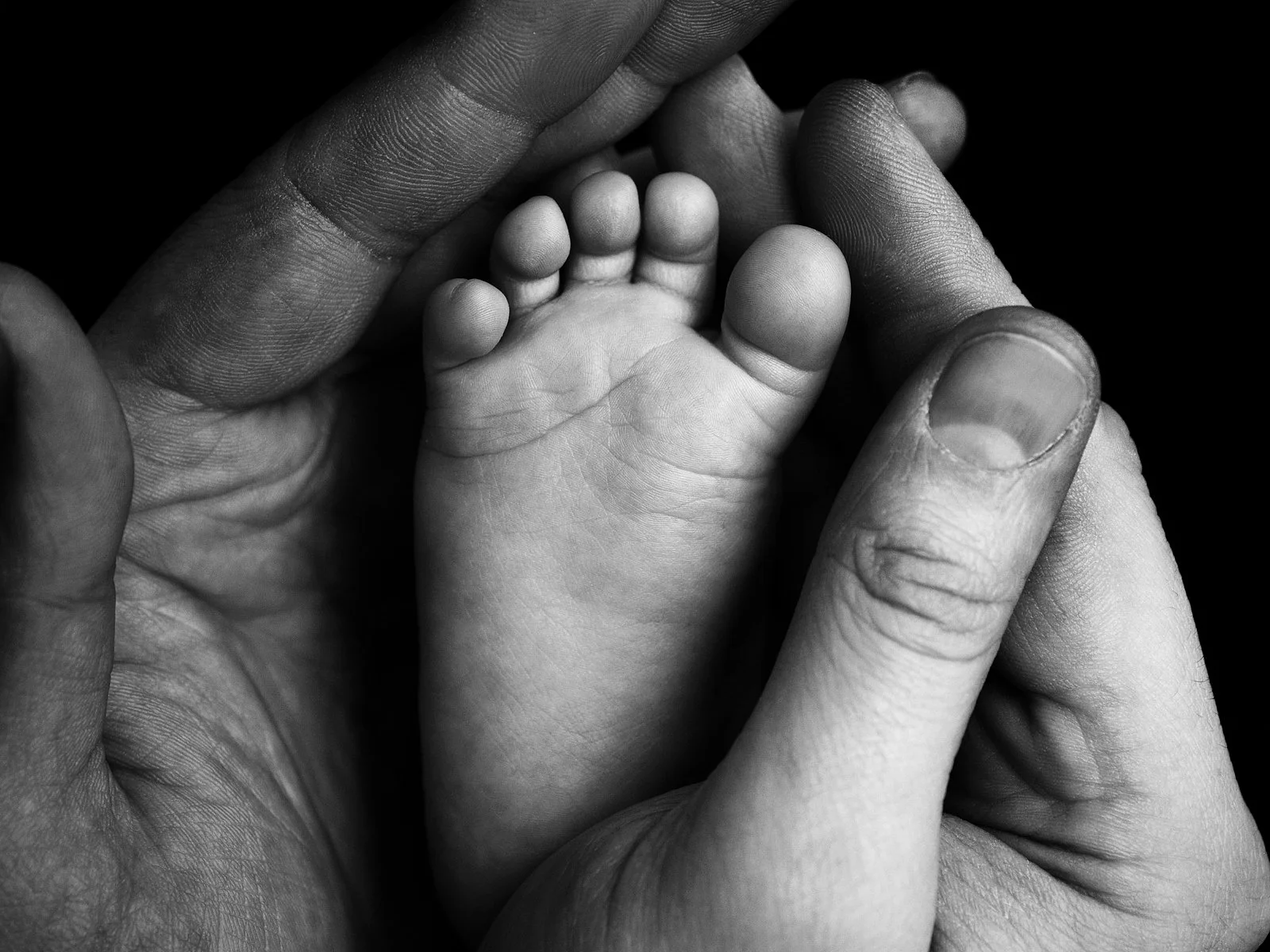
And then there are the experiences that resist diagnostic language entirely: the quiet grief of a parent who expected to feel one way and feels another. The sense of having lost a self that no one around them seems to notice is gone. The ambivalence — loving fiercely and mourning the life before, simultaneously — that culture insists should not exist. These experiences rarely appear on screening tools. They are not disorders. But they are perinatal mental health.
Maturation, Not Just Recovery
This is the reframe I want to offer: perinatal mental health is not only about identifying what has gone wrong and returning the parent to their prior baseline. It is also about supporting a process of psychological maturation that is supposed to be happening — one that is hard, even under the best circumstances, and that our culture has largely failed to hold.
Every new parent is, in some sense, becoming.
They are metabolizing a new identity. They are renegotiating their relationship to their own childhood, to their own parents, to their own needs. They are learning, often for the first time, what it means to be responsible for another person's inner life. This is enormous work. It changes people. And it should.
When distress arises in this context, the clinical question is not only how do we relieve the symptoms but what is this distress in the service of? Is it a signal that something from the past needs attention? Is it part of the disorientation that comes with genuine psychological growth? Is it both?
A parent who arrives in my office struggling is, more often than not, someone whose psyche is doing exactly what it learned to do, in response to what it encountered. The parent who cannot bond with their baby may be protecting themselves — but it may also be that becoming a mother has confronted them with an unbearable deprivation: they are now the one who must give, and there is no mother coming for them. The baby's need throws their own unmet need into sharp relief. The parent flooded with anxiety may be someone for whom vigilance was, at some point, survival. The distress is real. But beneath it is usually a logic — and understanding that logic is where the work begins. What such a parent needs is not a corrective but a space: to think, to feel, to understand what is happening to them at a deeper level than any screening questionnaire can reach.
What This Means for Support
If you are pregnant, postpartum, or supporting someone who is, and something feels off — please don't wait for the symptoms to become undeniable. But also: please don't wait to be told that what you're experiencing has a name. You don't need a diagnosis to deserve care.
The perinatal period is one of the most psychologically alive periods of human life. The discomfort it brings is often not a sign that something has gone wrong. It is a sign that something significant is happening — something that, with the right support, can be moved through and understood rather than merely endured.

Therapy during this time is not about fixing a broken parent. It is about accompanying someone through one of the most demanding passages of adult psychological life — with curiosity, with depth, and with respect for everything that is trying to emerge.
Find Maternal Mental Health Support in Washington, DC
If some of these experiences feel familiar, postpartum therapy can offer a place to think more deeply about what you are going through. Learn more about postpartum therapy in Washington, DC.
Other Services Offered with Nina Van Sant, LICSW
Postpartum therapy is not the only service offered by Nina Van Sant, LICSW. I am happy to offer multiple services to support clients, including psychoanalysis, infertility-related stress, and therapy for teens and older adults at different developmental stages. I also work with expats and international professionals who are managing cultural adjustment, relocation stress, and the emotional weight of major life changes. Visit my blog for more helpful information!