Between Two Languages, Two Selves: Psychodynamic Therapy in Washington, DC for Bilingual Expats
Many people who have moved to another country describe a feeling that is surprisingly difficult to explain.

"I feel different here."
"I miss something, but I'm not sure what."
"I can function well, but I don't quite feel like myself."
"Sometimes I wonder whether the person I was before I moved still exists."
Moving to another country is not only a geographical transition.
It is also an emotional one.
We often think of migration as adapting to a new language, finding work, making friends, or learning new customs.
These are important challenges.
But there is another transition that receives much less attention.
Our emotional lives are also deeply connected to places.
Home Lives Within Us
When we think of home, we usually think of a country, a city, or a house.
Psychodynamically, home is also something we carry inside us.
It is built over years through relationships, routines, familiar streets, ordinary conversations, smells from the kitchen, favorite foods, the rhythm of everyday life, and the language in which we first learned who we were.
Most of the time we hardly notice how much these experiences support us.
They quietly give us a sense of continuity and belonging.
When we move to another country, we do not simply leave behind a place.
We lose an entire emotional landscape that had been organizing our daily lives without our realizing it.
When the World No Longer Feels Familiar
Many expats describe feeling disoriented in ways that are difficult to explain.
The food tastes different.
The streets sound different.
People greet each other differently.
Humor is especially different.
Conversations require more effort.
Even ordinary tasks demand attention.
The ease of moving through the world disappears.
These changes are not simply inconveniences.
They can leave us feeling as though something inside us has also become unsettled.
Experiences that once felt automatic now require conscious effort.
The familiar emotional map that guided us through daily life no longer quite fits the world around us.
This can create feelings of loneliness, confusion, homesickness, or a vague sense that something important has been lost.
Language Is More Than Communication
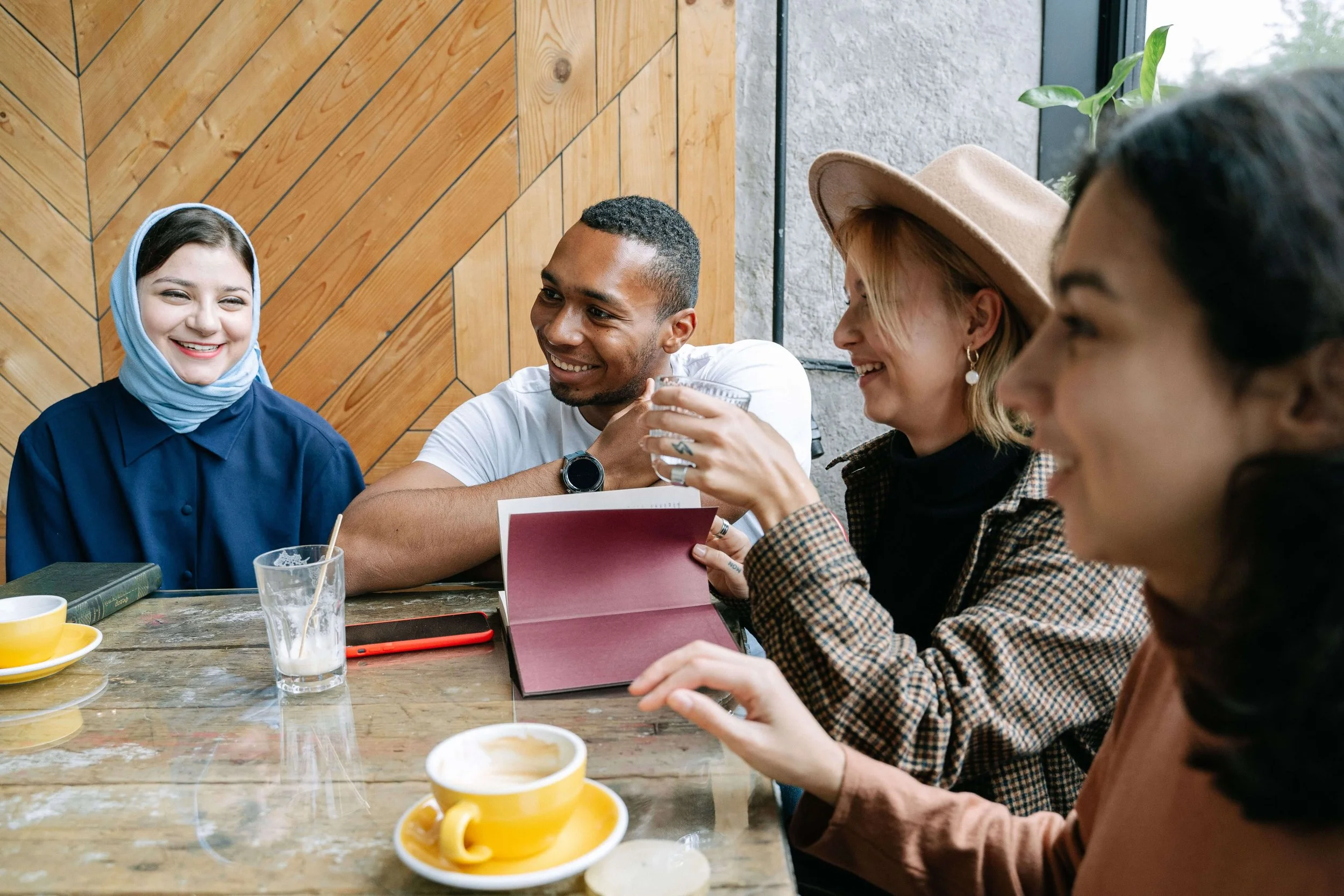
Language is not simply a tool for expressing thoughts.
It is also one of the ways we experience ourselves.
Our first language often carries the voices of childhood, family relationships, comfort, conflict, humor, affection, and belonging.
A second language may become the language of work, education, independence, or building a new life.
Because of this, different languages sometimes provide access to different emotional experiences.
A childhood memory may feel vivid in one language but strangely distant in another.
Someone may find it easier to express vulnerability in their first language and confidence in their second.
Certain jokes, expressions, or emotions may simply not exist in the same way across languages.
Sometimes people discover that they have not lost a part of themselves.
They have simply lost easy access to it.
Psychodynamic therapy is interested in these moments.
Rather than asking which language is the "real" one, we become curious about what each language makes emotionally available.
When Part of Yourself Feels Left Behind
Many people eventually begin to ask:
Which version of me is the real one?
The person I was before I moved?
Or the person I have become now?
From a psychodynamic perspective, this question often reflects something deeper.
Migration can create the feeling that different parts of one's life exist in different places.
One part of you still belongs to your family.
Another belongs to your professional life abroad.
One exists in your mother tongue.
Another has developed in a different language.
Sometimes the life left behind begins to feel strangely unreal.
People wonder whether that earlier version of themselves still exists.
Whether those friendships, routines, or ways of being are still part of who they are.
This experience is not simply about nostalgia.
It is an experience of mourning.
Not only for a place, but for a way of existing in the world.
Putting Words to Experiences That Have None
One of the central aims of psychodynamic therapy is helping people put words to experiences that have remained difficult to think about.
Some experiences have never been spoken.
Some occurred before we had language to describe them.
Others become difficult to express because they belong to another language, another country, or another chapter of life.
At times, these experiences are felt not as thoughts but as homesickness, anxiety, bodily sensations, loneliness, or the persistent feeling that something important is missing.
Together, therapist and patient gradually create language for experiences that previously existed only as feelings.
As experiences become more thinkable, they often become less overwhelming.
Becoming at Home in More Than One Place
Migration often feels as though it temporarily disrupts one's sense of identity.
The familiar ways of understanding oneself no longer feel entirely reliable.
New parts of oneself begin to emerge, while older parts may feel distant or inaccessible.
Over time, however, many people discover that they are not choosing between two lives.
They are gradually learning to hold both.
The goal of psychodynamic therapy is not to decide which country, language, or version of yourself is the authentic one.
It is to understand how they belong together.
As this happens, people often find that the emotional meaning of home begins to expand.

Home is no longer only a place left behind.
It becomes something carried within.
The memories, relationships, languages, and emotional experiences that once felt divided gradually become part of a richer and more integrated sense of self.
The internal map that was once disrupted by migration becomes more expansive.
Rather than replacing one home with another, people begin to carry both within them.
Start Psychodynamic Therapy in Washington, DC, Chevy Chase, MD, and Bethesda
Living between two languages, two cultures, and two versions of yourself can feel isolating, even when life looks fine on the surface. You don't have to choose which self is the "real" one, and you don't have to carry that disconnection alone. You can start receiving the support you deserve from Nina Van Sant, LICSW by following these simple steps:
Meet with a caring psychodynamic therapist
Start building a home within yourself that holds all of who you are.
Other Services Offered with Nina Van Sant, LICSW
In addition to psychoanalysis, I also provide a variety of services to help clients who are navigating a wide range of emotional challenges and mental health concerns. Other services offered include infertility-related stress, postpartum therapy, and therapy for teens and older adults at different developmental stages. I also work with expats and international professionals who are managing cultural adjustment, relocation stress, and the emotional weight of major life changes. Visit my blog or about page for more helpful support!